On this page
The arrival walkthrough
Shenzhen has two realistic ways in on the 240-hour scheme, and the sequence is different enough that mixing them up costs you real time. Pick the one you are actually using.
The trap: the road crossings are exit-only on this scheme
You cannot enter mainland China on the 240-hour scheme at Lo Wu, Futian, Huanggang, Shenzhen Bay, Liantang, Man Kam To or Sha Tau Kok. Guangdong has exactly ten eligible entry ports, and none of those road crossings is one of them — they are exit ports only. If you walk up to Lo Wu expecting a transit permit, you will be turned away. From Hong Kong, the two lawful entry points on this scheme are West Kowloon Station by train and the Hong Kong–Zhuhai–Macau Bridge (which lands you in Zhuhai, not Shenzhen).
-
Pre-inspection happens while your bag is scanned
The international arrivals area uses "先期机检": your cabin baggage goes through an integrated scanner that completes health-quarantine checks at the same time, so you don't queue twice. Checked bags are screened non-intrusively in the sorting hall, so you collect them and walk out.
-
Arrival card, then the right queue
Have the arrival card done (online before you fly, or at a kiosk). Follow signs for temporary entry / 240-hour transit, not the general foreign-passport lane if you're claiming the exemption. Say "240-hour transit, visa-free" and show your onward ticket.
-
Fingerprints, photo, questions
Standard for all foreign arrivals. Expect a couple of questions about where you're staying and where you're going next. Answer briefly and consistently with your arrival card.
-
Baggage hall, then the AI flight assistant
Carousels are equipped with AI assistants supporting seven languages — you can ask which belt your flight's bags come off, or how to get to your next gate, without finding a human.
-
Exit east — visitor service centre
The International Visitor Service Center sits on the east side of the international arrivals exit on level 1 of T3. This is where you sort payments, SIM, transport and a city plan in one stop. It's free and it's open 24/7.
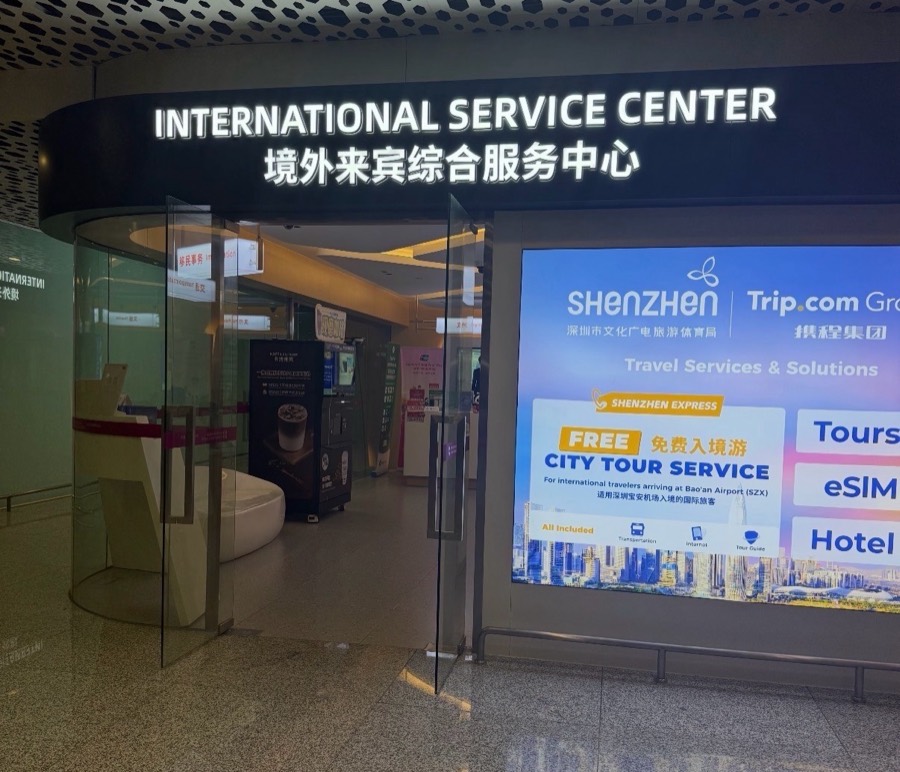
The service centre's own front door, right off T3 international arrivals. -
Then transport — follow the metro signs
Line 11 departs from the airport's own station beneath the terminal. Tap a contactless card, be in the city in 40 minutes.
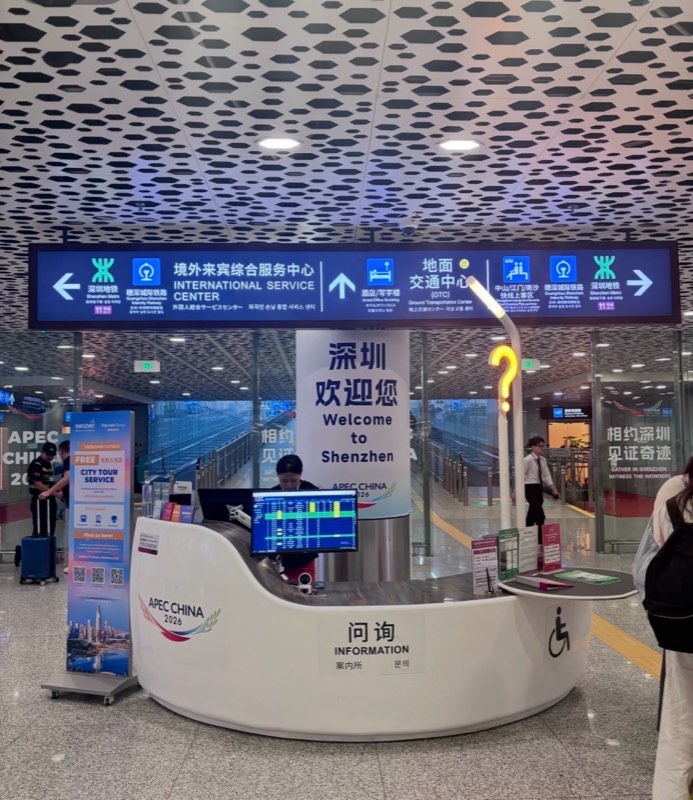
Line 11 airport station entrance — the service-centre information desk and Line 11 directional sign sit together here. 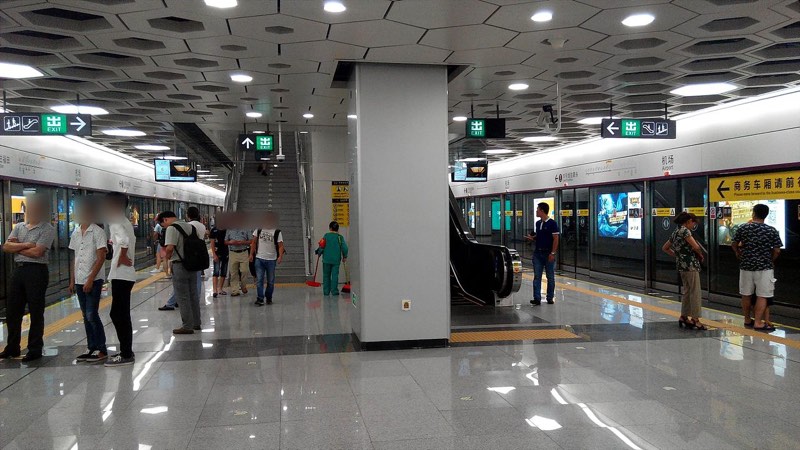
Line 11 Airport Station platform, screen doors and train.
-
Check your trip is genuinely a transit — before you buy a ticket
The rule is that the place you enter from and the place you go on to must be different. Hong Kong → Shenzhen → back to Hong Kong is not a transit and does not qualify. Hong Kong → Shenzhen → Macau, or → any third country, does. You need that onward ticket in hand at the border.
-
Book the train in advance
West Kowloon has been an eligible entry port for the 240-hour scheme only since 5 November 2025. Trains run to Futian (about 14 minutes) and Shenzhen North. Walk-up seats sell out at weekends, on public holidays and around APEC (18–19 November 2026) — book ahead.
-
Clear mainland immigration inside West Kowloon, not on arrival
Under the "joint checkpoint" arrangement the mainland border post sits inside West Kowloon station in Hong Kong. Go to the visa-free transit desk there, present your passport and onward ticket, give biometrics, and get the temporary entry permit before you board. Allow 45–60 minutes for this.

West Kowloon Station B1 level — ticketing and the mainland port area (where joint-checkpoint immigration happens). -
You step off already in the city centre
This is the big advantage over flying. Futian station is in the CBD with metro lines 2, 3 and 11; Shenzhen North is a major interchange on lines 4, 5 and 6. No 45-minute airport transfer — you can be at your hotel within 20 minutes of stepping off the train.
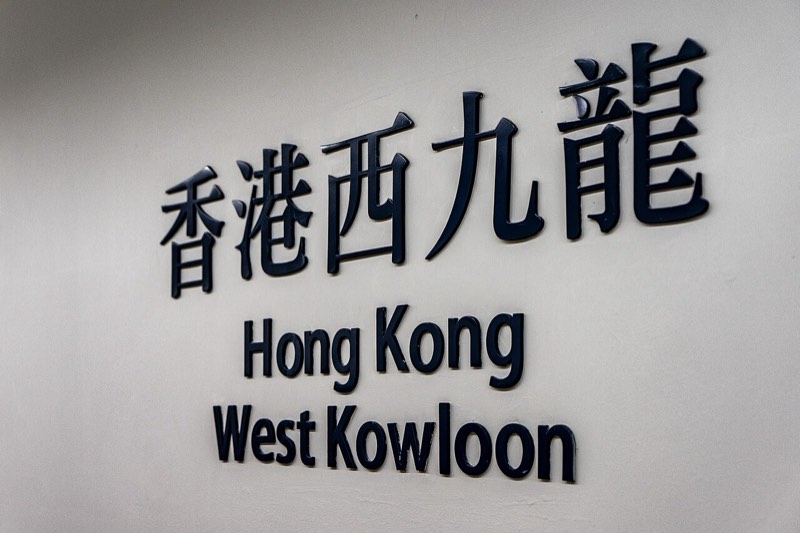
West Kowloon platform — the station-name sign you're looking for. -
Sort payments and data while you are still in Hong Kong
There is no arrivals service centre at Futian or Shenzhen North comparable to the airport's — no one will install Alipay for you. Bind your foreign card to Alipay or WeChat Pay, and switch on your eSIM, before you cross, while the app stores and wi-fi are unrestricted. This is the single most common mistake on this route.
-
Tap a bank card at the metro gate
Since 30 June 2026 all 17 metro lines and 432 stations accept Visa, Mastercard, American Express, JCB and UnionPay — just tap on a marked gate. Keep some HKD or CNY cash as a fallback; taxis and small shops are less reliable than the metro.
Fill your arrival card online — nationwide
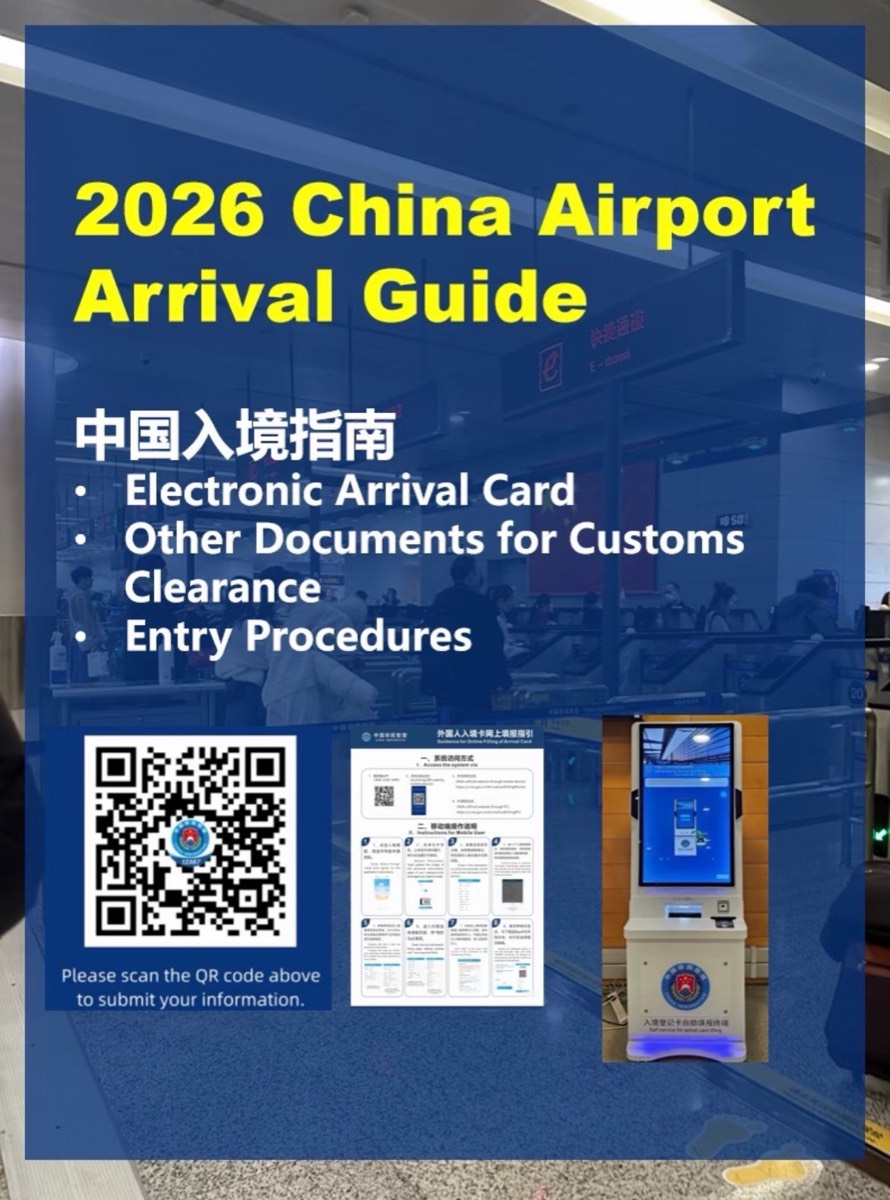
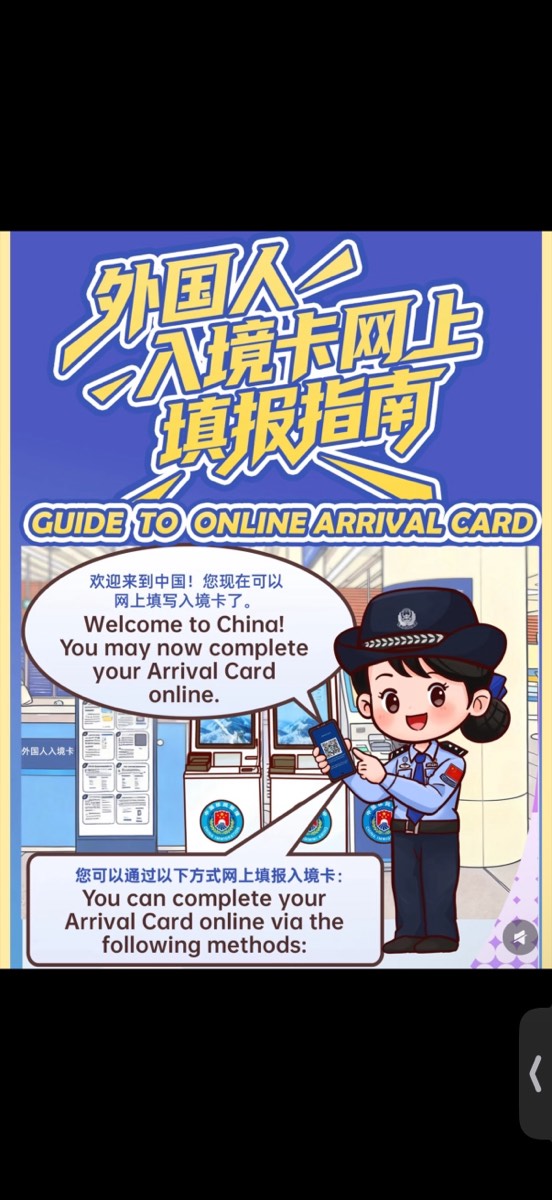
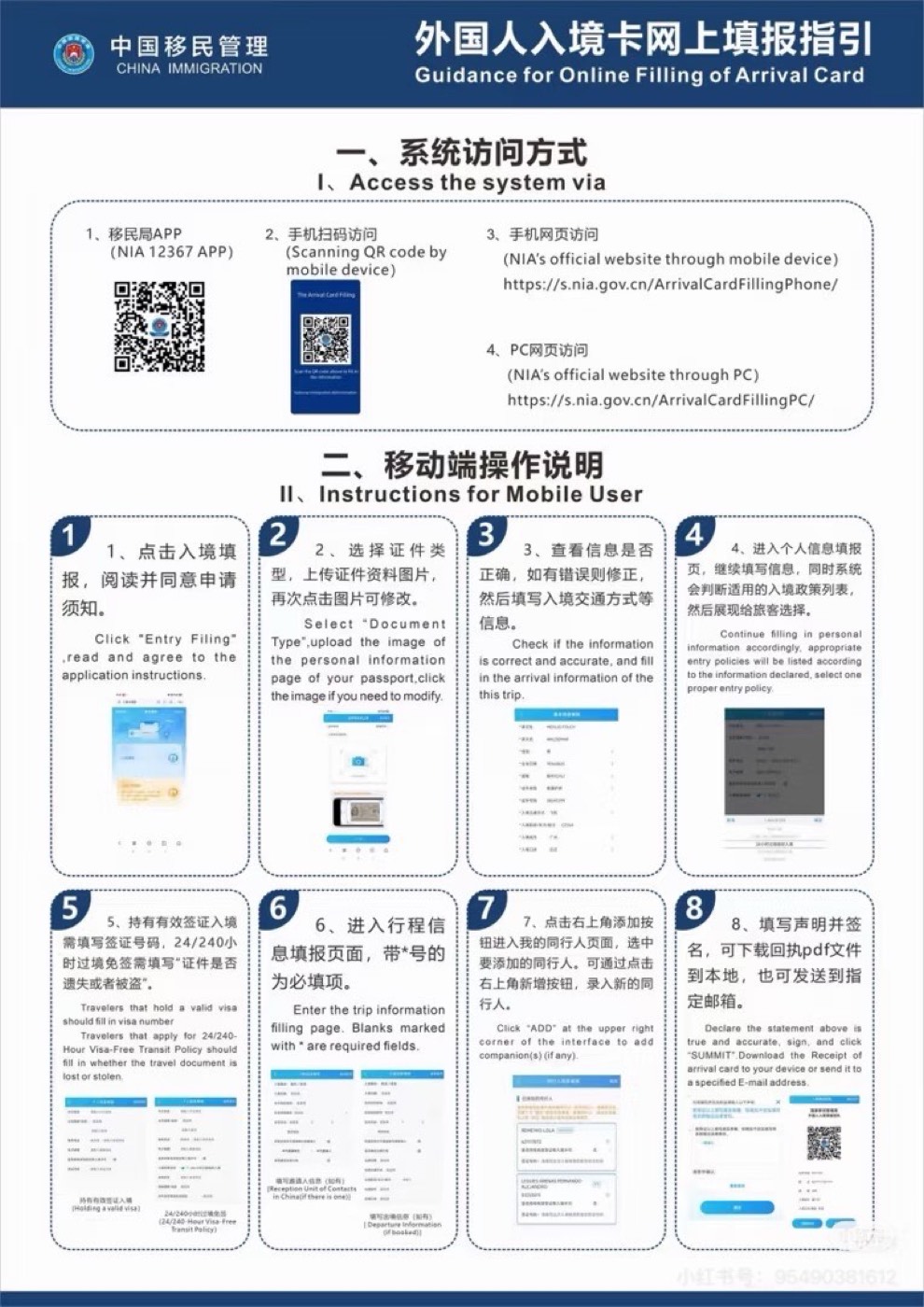
China has replaced the paper arrival card with an online one. It works at every port of entry in the country, not only Shenzhen. Do it before you fly, or use a self-service kiosk once you land.
File it online, before you fly
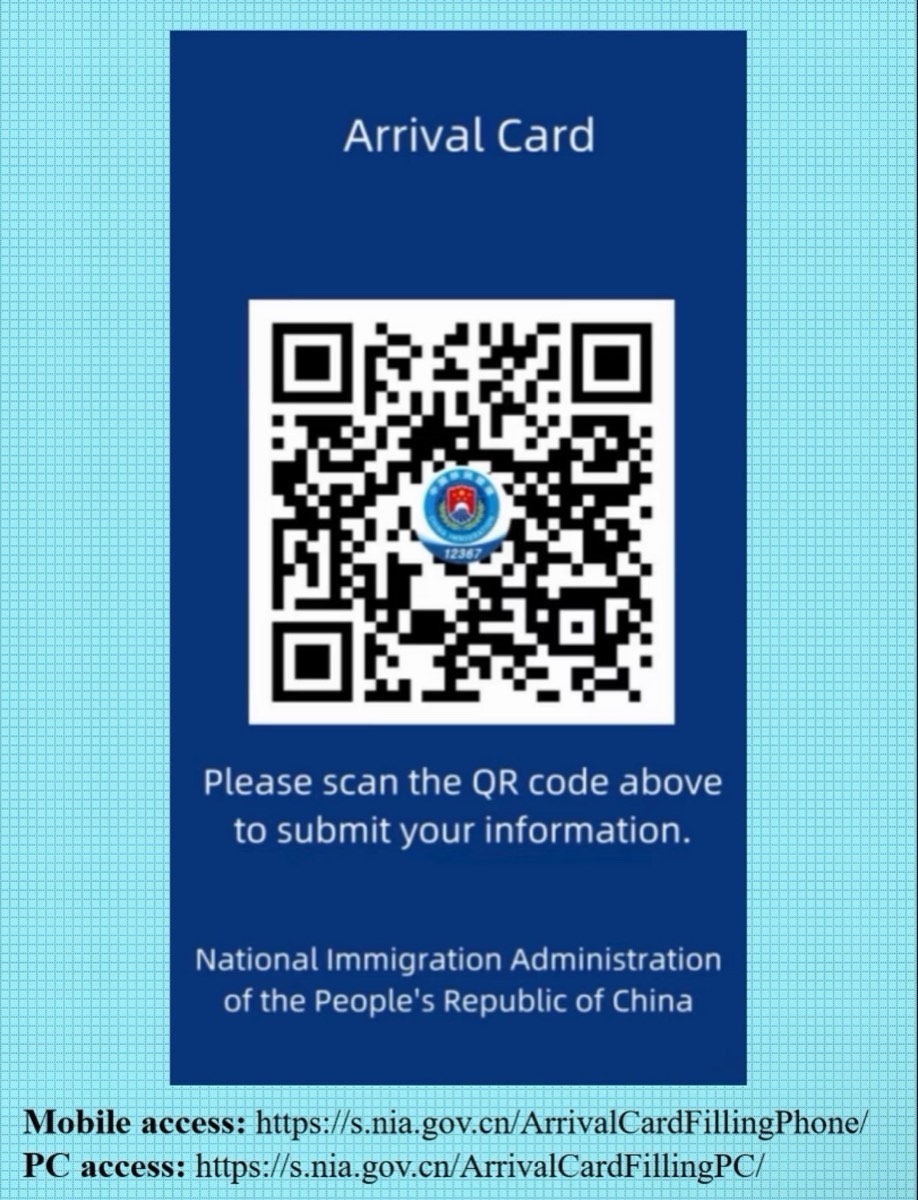
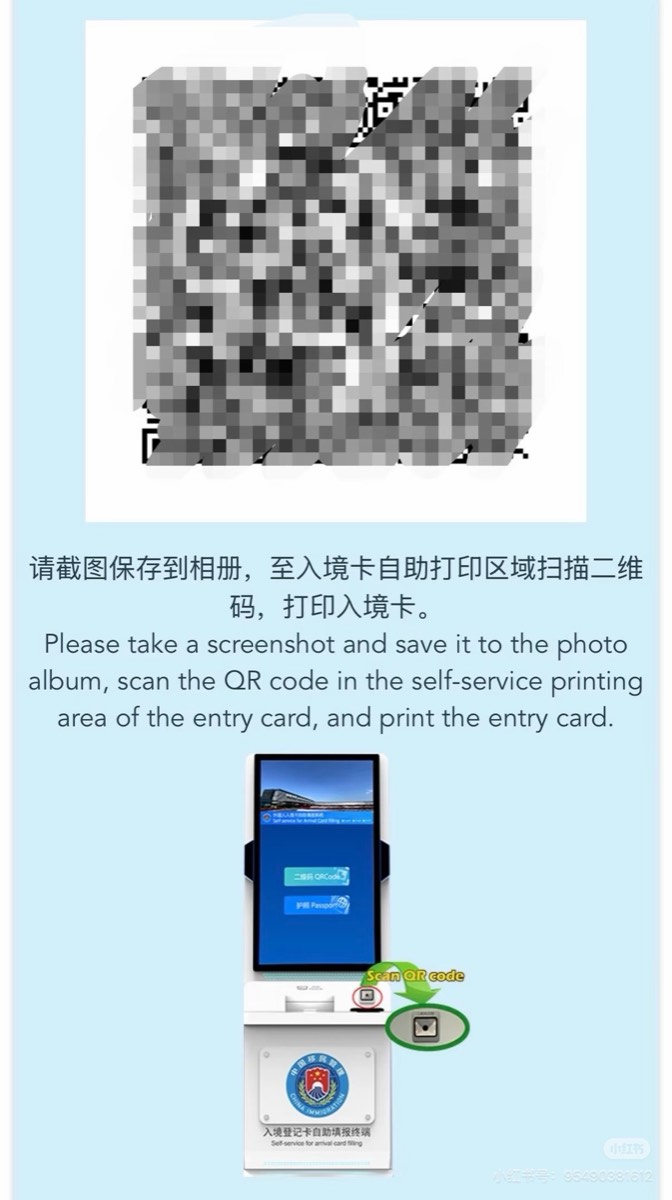
The paper arrival card is gone. China now takes it as an electronic declaration. File online a day or two before departure and you skip the queue at the airport; if you don't, you can still do it on arrival at a self-service kiosk or by QR code. Both routes are free and are used at airports, land ports and seaports across the whole country.
Four ways to file it
WeChat mini-program
In WeChat, search for "国家移民管理局政务服务" (National Immigration Administration Government Services). The quickest option if you already use WeChat.
Official app
Download the "NIA 12367 / 移民局12367" app from your app store.
Mobile or desktop web
Open s.nia.gov.cn/ArrivalCardFillingPhone in any browser — there's a PC version too.
On-the-spot QR code
Not filed yet? In the immigration hall look for the blue "Arrival Card" QR standee and scan it to file from your phone.
Filing tips
- When: file a day or two before you fly. You'll get a receipt with a QR code — screenshot it or email it to yourself.
- One form for the family: one person can file on behalf of the whole family; the main applicant adds companions afterwards, so nobody fills it twice.
- Language: the system is multilingual and switches automatically to a language based on your passport's issuing country.
Faster at Shenzhen Bao'an: dedicated filing terminals
The arrivals hall runs a self-service "foreign arrival card" system. Put your passport on the document reader and it reads and fills your details for you — it also recognises your passport's language and translates the form. Passengers report saving 60–80% of the filling time.
Two things people forget
240-hour transit exemption: carry a passport valid for at least 3 months and a confirmed onward ticket with a seat to a third country within 240 hours — then go to the "Arrival Immigration 24/240-hour waiting area" to complete the formalities.
Accommodation registration within 24 hours: a hotel registers you automatically. In a friend's flat or a homestay, you or your host must register at the local police station within 24 hours. This is separate from the arrival card — see the registration rules.
Official links: mobile s.nia.gov.cn/ArrivalCardFillingPhone · desktop s.nia.gov.cn/ArrivalCardFillingPC · or the NIA "12367" app.
Five service centres, open around the clock
Shenzhen built these specifically to solve the "first hour" problem for foreign arrivals: someone stands next to you, in English, until your phone actually works.
| Location | Best for |
|---|---|
| Shenzhen Bao'an Airport T3, level 1, international arrivals hall (east side of the exit) | Everyone arriving by air. Five counters: payments, telecom, transport, culture & tourism, immigration. |
| Shenzhen Bay Port | Crossing from Hong Kong on a visa, or on a visa-free route other than the 240-hour scheme. Banking and telecom desks on site. |
| Luohu Port | The busiest land crossing, next to Shenzhen railway station. Good for cash exchange and SIM. |
| Futian Port | Connected to Hong Kong's Lok Ma Chau Spur Line; directly above metro lines 4 and 10. |
| Longhua business district | In-town option if you're already shopping or staying in northern Shenzhen. |
If you are on the 240-hour scheme, only the airport one is for you
The port centres above serve everyone who arrives in Shenzhen — but the 240-hour visa-free transit scheme cannot be used to enter at Luohu, Futian, Shenzhen Bay, Huanggang, Liantang, Man Kam To or Sha Tau Kok. Guangdong has ten eligible entry ports and those road crossings are not among them; they are exit ports only. Entering from Hong Kong on this scheme means West Kowloon Station by train, or the Hong Kong–Zhuhai–Macau Bridge — which puts you in Zhuhai, not Shenzhen.
What they'll actually do: install Alipay or WeChat Pay, bind your foreign card to it, walk you through your first QR payment, sell you a SIM or e-SIM, exchange cash, issue a digital-RMB hard wallet, help with a metro route or a taxi, and hand you the AI city travel card. Staff from eight banks rotate through on a 7×24 basis. By end-June 2026 the airport and port centres had handled close to 40,000 consultations.
Two free tours — and which one you can claim
Shenzhen is unusual in running genuinely free guided tours for transit passengers. Both are real, both are limited, and they solve the "I have 8 hours and no plan" problem.
For anyone entering via SZX
Run by the Shenzhen culture and tourism bureau with Trip.com, this one-year programme is open to every international traveller arriving at Shenzhen Bao'an Airport — not just those in transit.
- Route: Lianhuashan Park → Nantou Ancient City → Talent Park
- Multilingual guiding, covering reform history, 1,700-year-old heritage and the tech-bay skyline
- Sign up at the culture & tourism counter, T3 level 1 international arrivals
For layovers over 6 hours
Shenzhen Airport's own product for international and regional transfer passengers with a connection more than six hours away. Two routes, both 4–6 hours, both free.
- Heritage route: Nantou Ancient City + Shenzhen Bay Talent Park
- Bay route: OCT Harbour + Bay Glory Ferris Wheel
- Register by QR code, gather at the meeting point, first-come first-served
- Requires a valid visa or qualification for the 240-hour transit exemption
See both routes mapped, with the booking steps →
Airport to the city: four ways
Fares are approximate and depend on your exact destination. Metro is the default answer; a taxi is worth it after 23:00, with heavy luggage, or with three or more people.
| Mode | To Futian / city centre | Cost | Notes |
|---|---|---|---|
| Metro Line 11 | ≈ 40–50 min | ≈ ¥7–9 | Cheapest and most predictable. Tap any Visa / Mastercard / Amex / JCB / UnionPay card at the gate, or use an Alipay ride code. Line 11 has business-class carriages (extra fare, second tap required on the platform). Change at Chegongmiao, Futian or Qianhai for other lines. |
| Airport express bus | ≈ 50–70 min | ≈ ¥20–30 | Several routes to Luohu, Futian, Nanshan, Longhua and Shenzhen North railway station. Useful if you're staying near a stop and the metro would need two changes. Pay in cash or by QR code on board. |
| Taxi | ≈ 40–60 min | ≈ ¥90–130 | Follow the official queue outside the arrivals hall — ignore touts who approach you inside. Drivers rarely speak English: show the hotel name in Chinese characters. Most taxis accept Alipay/WeChat QR; paying by card is still hit and miss. |
| Didi (ride-hailing) | ≈ 40–60 min | ≈ ¥80–120 | Didi has an English interface and works with foreign cards, and the pickup point is written into the app — no negotiation, no pronunciation problem. Needs data and a working payment method, so set it up at the service centre. |
Heading straight to Hong Kong instead? The airport's Fuyong ferry terminal (08:00–21:00) runs direct ferries to Hong Kong International Airport's sea terminal and to central Hong Kong — you clear Hong Kong immigration on arrival and, for the airport route, your bags can be checked through. There are also cross-border coach and limousine services to Hong Kong Island, Kowloon and the HK–Zhuhai–Macau Bridge port.
Arrived by train instead? You can skip this whole section
West Kowloon trains stop at Futian (metro lines 2, 3 and 11) or Shenzhen North (lines 4, 5 and 6) — both already inside the city, so there is no 40-minute airport transfer to pay for or wait for. Go straight to a marked metro gate and tap your card. The trade-off: those stations have no arrivals service centre, so payments and data have to be sorted before you cross.
Getting around Shenzhen
17 metro lines, 432 stations, and — since 30 June 2026 — every one of them takes international bank cards at the gate.
Metro — tap your bank card
Look for the "Tap to Ride" mark on the gate and tap your Visa, Mastercard, American Express, JCB or UnionPay card — or a phone with that card in Apple Pay / Google Pay. No app, no ticket, no cash. Fares are distance-based, typically ¥2–12. Full-line gate coverage was scheduled for end-August 2026; if a gate rejects your card, use a staffed service centre or an Alipay ride code instead.
Alipay ride code
In Alipay, search for 出行 (Transport), set the city to Shenzhen, and generate a QR code. The same code works on the metro and on city buses and needs no deposit or local bank account — just a foreign card bound to Alipay. This is the one to set up if you plan to move around a lot.
Shenzhen Tong card
The local stored-value card, ¥20 refundable deposit from any station service centre, gives about a 5% metro discount and works on buses too. Only worth it for longer stays — a few days doesn't recover the deposit hassle.
Buses, taxis and Didi
City buses are ¥2–3 and run roughly 06:00–22:30, but signage is Chinese-only — use them with a map app, not on hope. Taxis start around ¥10–11 and are metered; flag one down or use Didi, which gives you an English interface, a written pickup point and automatic payment. Ferries from Shekou reach Zhuhai, Macau and Hong Kong in about an hour.
Small things that help
Carry your hotel's name and address printed in Chinese characters — it solves taxis, directions and lost-phone moments. Screenshot your route before you lose signal. Metro operating hours are roughly 06:30–23:00 depending on the line, so check the last train if you're out late. And note that metro security screening applies at every station, so allow three extra minutes.
Port opening hours
These are the land and sea crossings you are most likely to exit through on your onward leg — and the ones people wrongly try to enter on. Read the warning below the table before you plan a route around one of them. Hours shift for holidays and special events — check the "i口岸" mini-program for live congestion before you commit.
| Port | Hours | Getting there | Busy times |
|---|---|---|---|
| Huanggang | 00:00–24:00 | Metro line 7 (walk out of the joint inspection building and over the footbridge) | Inbound 08:30–12:00, 22:30–02:00 |
| Luohu | 06:30–24:00 | Metro line 1 at Shenzhen railway station, level B1 | Inbound 08:00–15:00 and 16:00–20:00; outbound 08:00–12:00 and 16:00–23:00 |
| Futian | 06:30–22:30 | Metro lines 4 and 10 inside the joint inspection building, level 1 | Inbound 08:00–12:00 and 15:00–21:00 |
| Shenzhen Bay | 06:30–24:00 | Bus and taxi from the north exit; no direct metro yet | Inbound 08:00–13:00; outbound 15:00–21:00 |
| Liantang | 07:00–22:00 | Metro line 2, follow the signs out of the building | Inbound 08:30–13:00; outbound 15:00–21:00 |
| Man Kam To (Wenjindu) | 07:00–22:00 | About a 5-minute walk to Wenjin station, metro line 9 | Generally the quietest crossing |
| West Kowloon Station | 06:30–23:30 | Cross-border high-speed rail; joint immigration on the Hong Kong side | Inbound 08:00–10:00 and 15:00–17:00 |
| Shekou Cruise Homeport | 07:00–22:30 | About a 5-minute walk to Taiziwan station, metro line 12 | Inbound 08:00–10:00 and 15:00–17:00 |
| Fuyong ferry terminal (airport) | 08:00–21:00 | Shuttle from the terminal; direct ferries to HK Airport and Central | — |
| Shenzhen Airport | 00:00–24:00 | Air passenger clearance operates around the clock | Inbound 05:00–08:00 and 10:00–13:00; outbound 22:00–24:00 |
Which of these can you enter on the 240-hour scheme?
Entry allowed: Shenzhen Bao'an Airport, Shekou Cruise Homeport, and West Kowloon Station (since 5 November 2025).
Exit only: Huanggang, Luohu, Futian, Shenzhen Bay, Liantang, Man Kam To and the airport's Fuyong ferry terminal. Guangdong lets you leave from any open port in the province, which is generous — but it is the opposite of the entry rule, and the two are constantly confused. Flying into Shenzhen and walking to Hong Kong is fine; walking in from Hong Kong on this scheme is not.
APEC heads-up: the leaders' meeting on 18–19 November 2026 will mean temporary traffic controls and heavier crossings in Shenzhen. Huanggang's new joint inspection building is also being brought into service, with trial operations announced during 2026 — check for changes if you plan to use it.
Airport facilities worth knowing
Wi-Fi and power
Free airport Wi-Fi covers the terminal; the captive portal can be fussy, so treat it as a stopgap rather than your connection for the day. Power outlets and USB ports are widely available at gate areas.
Luggage storage and showers
Left-luggage counters and lockers are available in the terminal, and the "来深飞" transit programme includes free showers and rest options for eligible transfer passengers. Ask at the transfer desk.
AI translation and robots
AI translation devices at service desks handle 100+ languages. In the satellite concourse, the "Little Bee" delivery robots bring food to 38 gates — order from a restaurant and it arrives on a robot.
Currency and cards
Five currency exchange points and around ten ATMs that accept foreign cards. Foreign card acceptance across airport merchants is at 100%, and digital-RMB acceptance close to 90%.
AI city travel card
Given free to international visitors: about ¥15 of public transport credit plus ¥700+ of vouchers for attractions, hotels and malls, bundled with AI translation, transport and city-guide functions.
Restrooms
Genuinely well equipped: screens showing free cubicles, air quality and temperature; family toilets with child seats; nursing rooms with warm water and changing tables; vending machines for nappies and toiletries.
Photo credits
All photos are real stations, platforms and signage from Wikimedia Commons under CC BY-SA 4.0.
- Line 11 Airport Station platform — Wahsaw — Wikimedia Commons
- Hong Kong West Kowloon Station B1 — Prosperity Horizons — Wikimedia Commons
- West Kowloon platform signage — Sparktour — Wikimedia Commons
- Arrival-card posters, self-service kiosk and 8-step guide — National Immigration Administration of the PRC (public guidance) — s.nia.gov.cn
- International Service Center entrance, T3 arrivals level — user-contributed photo (public facility, reference use)
- Line 11 airport station entrance with service-centre desk and directional sign — user-contributed photo (public facility, reference use)